
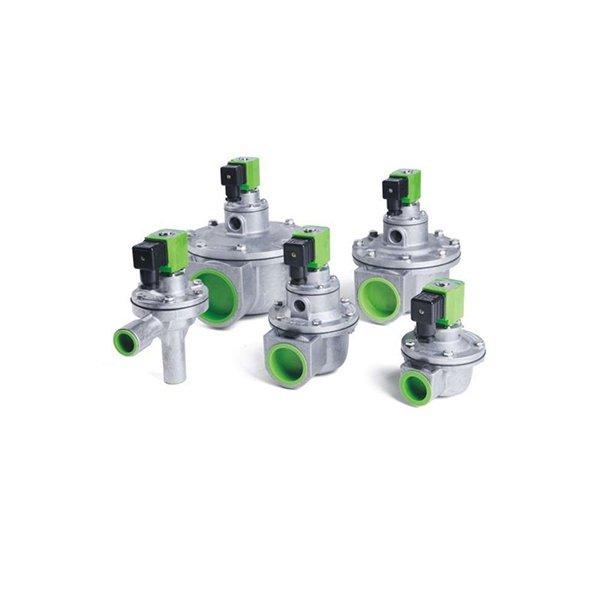
Analysis of the selection criteria for Explosion-proof Pulse Valve dedicated to the chemical industry, mainly involving multiple aspects such as explosion-proof grade, explosion-proof type, applicable environment, electrical parameters, structural design, material selection, and certification standards.
I. Explosion-proof Grade and Explosion-proof Type
The explosion-proof grade is a core element in the selection process. The appropriate explosion-proof type should be chosen based on the hazardous area grade of the explosive gas or dust (such as Zone 0/1/2). For example, the Zone 0/Zone 20 area only allows intrinsically safe (Ex ia) or potting (Ex m) equipment; For Zone 1/Zone 21, flameproof type (Ex d), increased safety type (Ex e), etc. can be selected. Explosion-proof types include flameproof type (Ex d), intrinsically safe type (Ex ia), encapsulation type (Ex m), etc. The selection should be based on specific application scenarios.
Ii. Explosion-proof Certification and Standards
Explosion-proof equipment must comply with international and national standards, such as GB 3836 series (China), IEC 60079 series (international), ATEX (European Union), etc. For example, explosion-proof solenoid pulse valves need to comply with standards such as GB3836.1-2000 and GB3836.9-2006, and explosion-proof marks such as Ex mb II T4/DIP A20 TA, etc. Some products also need to pass international certifications such as ATEX and IECEx.
Iii. Electrical Parameters and Structural Design
The electrical parameters of explosion-proof electromagnetic pulse valves (such as rated voltage, current, and power) need to match the actual usage scenarios. In terms of structural design, the explosion-proof type (such as flameproof type, intrinsically safe type) and structural form (such as right-angle type, submerged type) should be selected based on the application scenario. For instance, the structural forms of explosion-proof solenoid pulse valves include right-angle type, submerged type, flameproof type, etc.
Iv. Materials and Protective Performance
The materials of explosion-proof equipment must meet the explosion-proof requirements. For example, the materials of explosion-proof solenoid valves can be cast steel, aluminum alloy, stainless steel, etc. The protection grade of explosion-proof equipment (such as IP65, IP67) should be selected based on environmental conditions.
V. Selection Principles and Application Environments
The selection should comprehensively consider principles such as safety, reliability, applicability and economy. For instance, in the chemical industry, explosion-proof solenoid valves need to select appropriate models and parameters based on the grade of the hazardous area, the type of explosive gas/dust, temperature range, environmental conditions, etc.
Vi. Typical Products and Applications
Explosion-proof electromagnetic pulse valves are widely used in industries such as chemical engineering, petroleum, and coal chemical engineering, for dust removal systems, ash cleaning systems, and underground coal mine equipment, etc. For instance, the BDMF series explosion-proof solenoid pulse valves come in various models and specifications, suitable for different working conditions.
Vii. Standards and Norms
The selection of explosion-proof equipment should comply with relevant standards and norms, such as the "Fire Protection Code for Engineering Design of Fine Chemical Enterprises" and the "Code for Selection and Design of Automation Instruments in Petrochemical Industry", etc.
Summary
The selection of the Explosion-proof Pulse Valve dedicated to the chemical industry needs to comprehensively consider multiple factors such as explosion-proof grade, explosion-proof type, electrical parameters, structural design, materials, certification standards, and application environment. Through reasonable selection, it can be ensured that the equipment operates safely and reliably in flammable and explosive environments.