

In the modern era of environmental protection and resource management, the ability to analyze water quality accurately and efficiently has become a cornerstone of sustainable development. Water quality analysis equipment plays an indispensable role in ensuring safe water resources for human consumption, industrial use, and ecological balance. Among the many technological advancements in this field, SCH has emerged as a leader, offering cutting-edge multi-parameter water quality analyzers that combine precision, efficiency, and innovation.
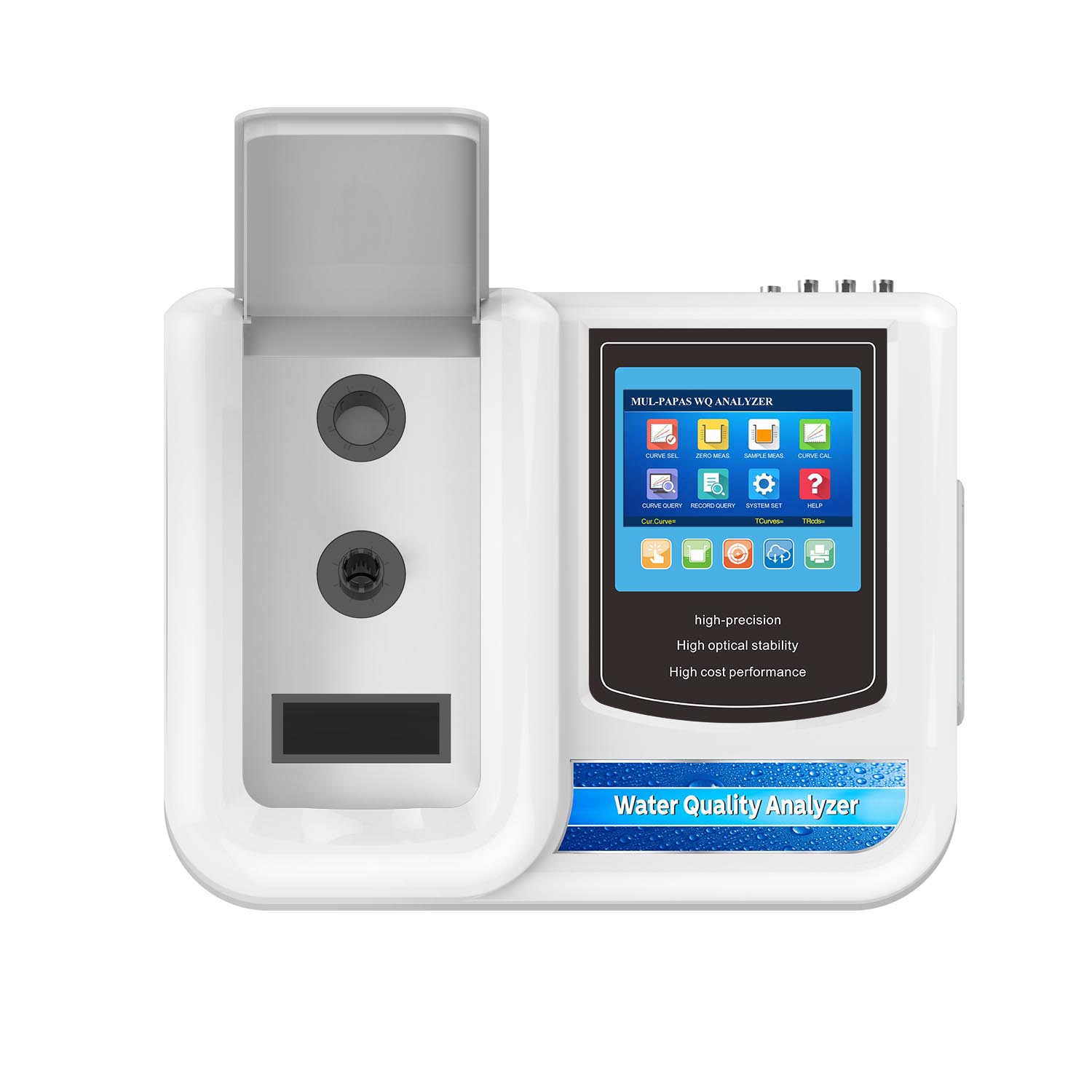
1. The Core Advantage of Multi-Parameter Water Quality Analysis Equipment
Traditional water testing methods often require multiple instruments to measure different parameters, resulting in time-consuming operations and inconsistent data sets. SCH’s water quality analysis equipment solves this challenge by integrating multiple measurement capabilities into a single, compact system.
This advanced equipment is capable of simultaneously measuring various water quality parameters, including but not limited to chemical, physical, and biological indicators. Chemical parameters such as COD (Chemical Oxygen Demand), ammonia nitrogen, total phosphorus, and total nitrogen can be analyzed alongside physical properties like temperature, turbidity, and conductivity, as well as biological indicators such as microbial activity.
This comprehensive detection system allows researchers and engineers to collect correlated data for integrated analysis, leading to more accurate and holistic evaluations of water quality conditions.
2. Comprehensive Design for Accuracy and Efficiency
At the heart of SCH’s water quality analysis equipment lies a combination of optical, chemical, and digital technologies. The integration of microcontroller hardware and intelligent software algorithms ensures stable performance, rapid analysis, and automatic calibration.
Through advanced spectrophotometric techniques, precise optical sensing, and high-sensitivity detectors, the instrument achieves excellent repeatability and low measurement error. The system also features automatic data storage and transmission functions, enabling real-time monitoring and remote analysis—an essential capability for modern water quality management systems.
3. Technological Excellence: The SCH Innovation Philosophy
For over a decade, SCH has been committed to the research, production, and sales of nearly a hundred types of water quality testing instruments. The company’s portfolio covers COD analyzers, ammonia nitrogen analyzers, total phosphorus analyzers, total nitrogen analyzers, as well as instruments for detecting heavy metals, inorganic compounds, and other waterborne contaminants.
The technology behind SCH’s instruments spans multiple disciplines—including computer science, microcontroller hardware and software, optics, and chemical analysis—ensuring that every device meets the most demanding standards of accuracy and stability.
SCH’s continuous investment in R&D allows its water quality analysis equipment to stay at the forefront of environmental monitoring technology, providing users with integrated, intelligent, and modular solutions that adapt to various application environments.
4. Applications Across Industries
The multi-parameter water quality analyzer from SCH is widely used in multiple sectors, including:
-
Environmental protection agencies for surface water and groundwater monitoring
-
Municipal water treatment plants for real-time quality control
-
Industrial wastewater management for pollution source tracking
-
Research institutions and laboratories for environmental analysis
-
Aquaculture and agriculture for water quality optimization
Its flexibility, stability, and compatibility make it an ideal solution for both field and laboratory use. Whether applied in continuous automatic monitoring systems or standalone laboratory measurements, SCH’s equipment delivers reliable and repeatable results.
5. Toward a Smarter, Greener Future
In an era where environmental challenges are increasingly complex, comprehensive, intelligent, and efficient water quality analysis is not just a technical necessity—it is a global responsibility. SCH continues to lead the industry by developing smarter monitoring systems that empower data-driven environmental decisions.
By providing innovative water quality analysis equipment, SCH supports sustainable development goals and contributes to cleaner water ecosystems worldwide.
Conclusion
The evolution of water quality analysis equipment represents a critical advancement in environmental technology. Through the combination of precision engineering, interdisciplinary innovation, and a commitment to sustainability, SCH has positioned itself as a trusted global partner in water quality monitoring. Its multi-parameter analyzers not only enhance analytical accuracy but also redefine efficiency and integration in modern water research and management.
https://www.schinstrument.com/innovative-approach-to-precision-environmental-monitoring.html