
In industrial fluid-transfer, laboratory gas delivery, and medical-adjacent pneumatic systems, connection reliability determines overall system safety and efficiency. Even the most advanced equipment can experience performance issues if the interface between components is unstable. This is where the Tracheal Extension Fitting becomes a critical engineering part—especially in applications requiring the needle and trachea (air tube) to be connected with stability and leak-free performance.
As industries focus on cleaner, more precise, and more automated systems, manufacturers such as Contriu have begun redefining the structural design, sealing technology, and micro-connection methodology behind these small but essential components.
1. What Is a Tracheal Extension Fitting? The Technical Definition
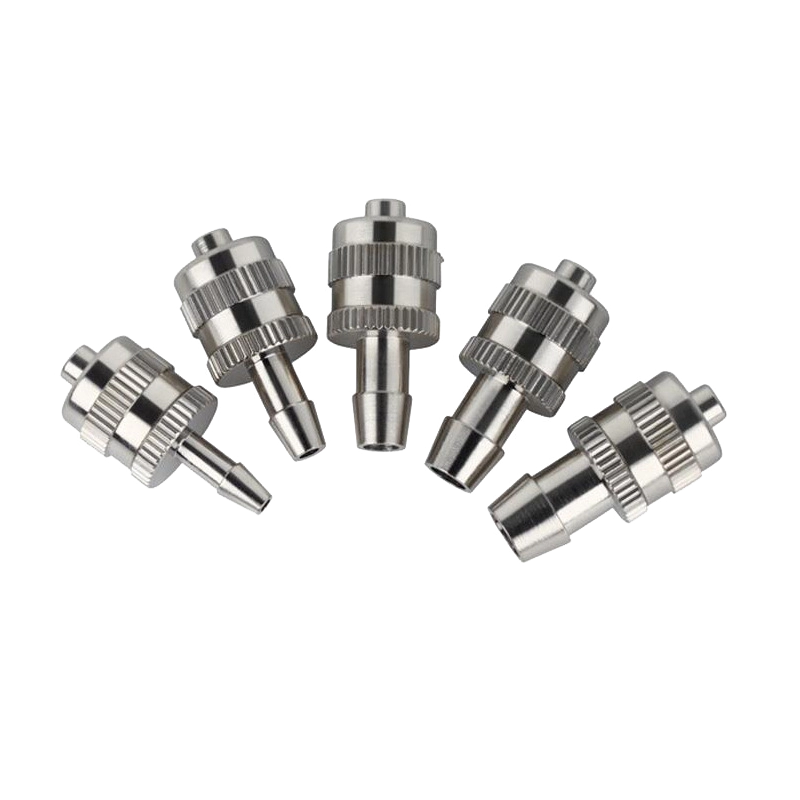
A Tracheal Extension Fitting is a specialized connector designed to link a needle (often used for precise fluid injection or micro-gas delivery) with a trachea or air tube. The fitting acts as an extension interface, providing:
Mechanical support
Consistent flow pathway
Pressure resistance
Leak prevention
Vibration damping
Stable alignment between needle and tube
Unlike general pneumatic connectors, this category must meet more demanding accuracy and sealing requirements because it often handles micro-flow, directional control, or high-purity mediums.
Typical structures include:
A reinforced extension body
Tight-tolerance inner bore
Threaded or quick-plug coupling
A locking sleeve for tube retention
A seal seat or embedded O-ring
This combination ensures the needle does not loosen, the trachea does not detach, and the flow remains uninterrupted even under dynamic operating conditions.
2. Core Functional Role: Connecting the Needle While Securing the Trachea
The primary engineering mission of the Tracheal Extension Fitting is simple yet technically challenging:
to connect the needle while connecting the trachea without compromising sealing efficiency or alignment accuracy.
Achieving this involves solving multiple mechanical problems simultaneously:
(1) Micro-Alignment of Needle and Tube
Misalignment—often only 0.1 mm—can cause:
Flow turbulence
Inconsistent injection volume
Increased back pressure
Wear at the contact points
High-precision fittings produced by Contriu apply CNC-controlled tolerances, ensuring the needle sits perfectly centered in the extension path.
(2) Dual-Interface Sealing Design
The fitting must seal two interfaces at once:
Needle inlet
Trachea outlet
Manufacturers use:
Fluororubber O-rings for chemical resistance
Single-piece metal seats for ultra-stable sealing
Tapered locking threads for high-pressure retention
(3) Protection Against Bending or Vibration
The extension body absorbs operational stress so the needle will not bend or crack—a common failure in lower-grade systems.
3. Why the Tracheal Extension Fitting Matters in Precision Systems
These fittings play a defining role in industries where accuracy and reliability are essential. Their value can be seen in three engineering dimensions:
(1) Stability Under Pulsating Pressure
Tracheal systems often experience pressure fluctuations. A normal connector may loosen over time, while dedicated extension fittings maintain:
Constant gripping force
Zero-slip tube retention
High resistance to cyclic fatigue
(2) Clean, Controlled Flow Path
For gas delivery, medical sampling, and laboratory analytics, the extension fitting ensures:
Smooth internal bore with minimal dead volume
Contamination-free flow
Predictable pressure curves
(3) Better Safety in Tight or Sensitive Spaces
The extension function allows the needle to be positioned optimally without stressing the main tubing—a major advantage in compact automation modules.
4. Contriu’s Engineering Approach: Reliability at Micro-Scale
As a manufacturer specializing in precision connectors and pneumatic accessories, Contriu integrates engineering refinement into each Tracheal Extension Fitting. Their solutions focus on three pillars:
(1) High-Tolerance Machining
Contriu uses digital machining centers capable of handling micro-details in:
Needle insertion ports
Extension chambers
Trachea gripping regions
Threaded segments
This ensures exceptionally stable axial alignment.
(2) Reinforced Sealing Architecture
Contriu incorporates multi-layer sealing systems for high-purity gases and fluids, using:
Precision-cut O-rings
Tapered metal-to-metal fit surfaces
Anti-backflow construction
These features minimize leakage even under high pressure or long-term use.
(3) Chemical and Environmental Robustness
Depending on the application, materials may include:
Stainless steel for corrosion-critical environments
Brass for standard pneumatic systems
Engineering polymers for lightweight setups
All components are tested for compatibility with solvents, gases, lubricants, and UV exposure.
5. Application Scenarios Across Industries
The Tracheal Extension Fitting is widely used in:
Laboratory Instrumentation
For micro-gas injection and analytical sampling tools.
Automation and Pneumatic Systems
Provides stable needle-to-tube interfacing where vibration is common.
Medical Device Integration
Ensures controlled and contamination-free fluid/gas delivery.
Precision Manufacturing Equipment
Used in dosing, spraying, and measurement modules.
High-Purity Chemical Processing
Particularly where zero contamination and micro-flow accuracy are required.
Conclusion
Although small in size, the Tracheal Extension Fitting is one of the core components ensuring reliable needle-to-trachea connectivity in precision fluid and gas systems. Its value lies in its engineering structure, dual-interface sealing, and ability to maintain accuracy under real-world operating conditions. With advanced machining and high-reliability materials, Contriu continues to deliver fittings that elevate system safety, durability, and flow precision.