
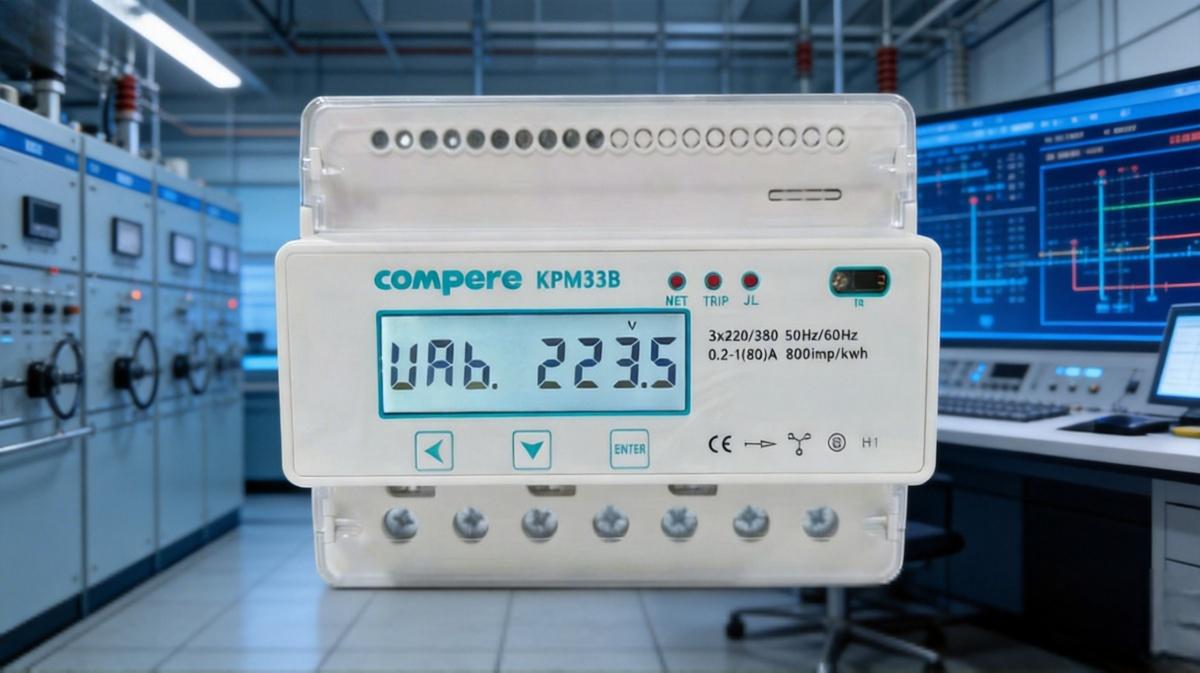
In modern life, electricity consumption has become as indispensable as air. However, for managers of commercial complexes, residential properties, industrial parks, and even rental properties, the traditional postpaid electricity model harbors many pain points: manual meter reading is time-consuming and labor-intensive, disputes arise from overdue electricity bills, and abnormal electricity usage is difficult to monitor. These problems not only reduce management efficiency but also directly impact economic returns.
With the deepening of smart grid construction, a smart device that reverses the "use electricity first, pay later" model to "pay first, use electricity later"—the prepaid electricity meter—is quietly changing this situation. It is not merely an upgrade of metering instruments but also a closed-loop management system encompassing cash flow, data flow, and control flow.
Addressing the Pain Points: A Management Revolution from “Payment Reminders” to “Self-Service”
For property and commercial managers, the greatest appeal of prepaid electricity meters lies in their zero-risk cash recovery capability. In the traditional model, managers often face a dilemma when tenants default on electricity bills: “Not cutting off power to collect payments damages relationships, but cutting off power also affects them.” Prepaid meters, with their built-in or external relays, automatically cut off power when payments are overdue, solving this problem at the physical level.
More importantly, combined with modern communication technology, this process is fully automated. Taking mainstream models like the Acrel DDSY series or Donghong SDM series as examples, they support multiple wireless transmission methods such as RS485 communication, 4G, and NB-IoT, enabling seamless integration with cloud-based energy management systems. Managers can achieve the following through a computer or mobile backend:
Remote meter reading: No more sending personnel to read meters door-to-door; data is uploaded in real time, reducing labor costs by over 50%.
Remote power on/off: Not only does it automatically trip when payments are overdue, but it can also be remotely restored after payment. It even supports emergency balance functionality, ensuring temporary power needs for users in special circumstances.
Flexible billing: Supports tiered pricing, peak-valley time-of-use pricing, and even allows for “one price per household” settings for shopping malls, making billing clear and transparent.
From “Card Insertion” to “Cloud-Based”: A Leap in User Experience Brought About by Technological Iteration
Early prepaid electricity meters mostly used an “IC card” system, requiring users to go to the service center to pay and then insert the card into the meter at home. While this enabled prepayment, it significantly reduced convenience. As residents of No. 45 Wenquan Courtyard in Haidian District, Beijing, once experienced: aging equipment, inability to check balances in real time, conflicts with payment times for working people, and frequent unexpected power outages.
Today's prepaid electricity meters have entered the “cloud era.” Through mobile apps, WeChat mini-programs, or Alipay, users can check their real-time balance and historical electricity consumption curves anytime, anywhere, and receive automatic system alerts when their balance is low.
This “transparent” consumption experience allows users not only to control their spending but also to adjust their electricity consumption habits by analyzing data, achieving energy conservation and consumption reduction. Data shows that after installing smart prepaid systems, some residents have seen an average decrease in electricity consumption of 5%–10%.
Scenario-Based Applications: Precisely Matching the Needs of Different Business Formats
The intelligence of prepaid electricity meters is not only reflected in their general functions, but also in their deep adaptation to different scenarios.
1. Commercial Complexes and Office Buildings
Shopping malls have high tenant turnover and high electricity load. Three-phase prepaid electricity meters (such as the SDM530Y or DTSY1352 series) have the capacity to directly connect to a maximum current of 100A and have built-in load control and malicious load identification functions. Managers can set total power limits through the system. If a tenant connects a high-power, unauthorized appliance causing an overload, the system will automatically trip to protect against fire.
2. Rental Apartments and Staff Dormitories
For long-term rental apartments and dormitories, prepaid electricity meters are not only a rent collection tool, but also a safety management tool. Managers can set timed power outages at night (such as automatic lights out at 11 PM) and accurately identify unauthorized appliances such as electric kettles. Once detected, power is immediately cut off to ensure the safety of residents.
For elderly people living alone or whose children pay on their behalf, the remote recharge function provides a convenient solution and peace of mind.
3. Industrial Parks and Temporary Electricity Use
Industrial parks consume a lot of energy and often require peak-valley pricing. High-precision (0.5S level) prepaid meters not only provide accurate metering but also, through data analysis, help businesses optimize production schedules, utilize off-peak electricity, and reduce electricity costs.
The Future is Here: More Refined and Fairer Electricity Metering
Looking to the future, the function of prepaid meters is evolving towards a deeper level of “data fairness.” According to the latest information released by the State Intellectual Property Office, companies such as Galaxy Power have begun developing automatic differential electricity billing technology based on dynamic rate fluctuations.
This means that when electricity price policies are adjusted or tiered rates change, the meter system can automatically calculate the difference in electricity consumption before and after the rate change and automatically deduct or refund it during the next top-up, completely resolving settlement disputes caused by rate changes and making the accounting process more accurate and fair.
Conclusion
In conclusion, prepaid meters have evolved from simple metering tools into integrated energy internet terminals encompassing payment, control, communication, and security, becoming a crucial piece of the puzzle in building smart cities and smart communities.
They solve the major challenge of electricity bill collection through a seemingly small intervention, not only protecting the interests of power suppliers but also granting end-users unprecedented autonomy over their electricity consumption.
For managers seeking cost-reduction and efficiency-enhancing solutions, upgrading to a prepaid system may be the key to unlocking intelligent and refined energy management.