
You want your baby to sleep safely each night. Many parents worry about dangers in their baby's sleep area. Experts from the FDA say infant head pillows can raise the risk of suffocation and sudden infant death syndrome. The American Academy of Pediatrics says your baby should sleep on their back. There should be no soft bedding or pillows. Dr. Ben Hoffman says head-shaping pillows are not needed for your baby. You can feel sure because there is clear advice for keeping your baby safe.
Key Takeaways
-
Put your baby on their back to sleep. Use a firm mattress. Do not use pillows or soft bedding.
-
Talk to your pediatrician before using any pillow. Make sure the pillow is safe for your baby.
-
Do not use infant head pillows. They can make suffocation and sudden infant death syndrome more likely.
-
Pick pillows made from non-toxic and breathable materials. This helps keep your baby safe and comfortable.
-
Follow safe sleep rules. Use pillows only when you are watching your baby. Do not use pillows for sleep.
Infant Head Pillow Safety
Expert Warnings and Guidelines
You want to protect your baby every time you put them to sleep. Experts from the FDA and the American Academy of Pediatrics (AAP) give clear advice about infant head pillow use. They warn that these pillows can increase the risk of suffocation and sudden unexpected infant death (SUID). You should never use an infant head pillow in your baby's crib or sleep space. The AAP and FDA recommend that you:
-
Place your baby on their back for every sleep.
-
Use a flat, firm mattress with a fitted sheet.
-
Keep the crib free of pillows, toys, and loose bedding.
-
Dispose of any infant head pillow you may have and do not give it to others.
-
Talk to your doctor if you worry about your baby's head shape.
You may hear that an infant head pillow can help prevent flat head syndrome. Experts say these pillows do not work for this purpose. Most babies' head shapes improve as they grow and move more. If you have concerns, your pediatrician can give you safe advice.
Note: The National Institutes of Health and the AAP both say that your baby should sleep in a bare crib. This means no pillows, no toys, and no soft objects. These steps lower the risk of suffocation and SUID.
You should know that pillows are one of the most common objects linked to infant suffocation. Studies show that pillows caused airway blockages twice as often in babies under four months old compared to older infants. In a review of over 1,600 SUID cases, more than 5% involved a nursing pillow in the sleep area. Pillows were linked to 24.5% of infant suffocation cases, more than mattresses, blankets, or walls. These numbers show why safety is so important when you choose what goes in your baby's crib.
When Can a Baby Use a Pillow?
You may wonder when it is safe to introduce any pillow to your child. The AAP says you should not use a pillow for your baby until they are at least two years old. Before this age, your baby does not have the strength or mobility to move their head if their airway gets blocked. This makes an infant head pillow very dangerous for sleep.
Even after your child turns two, you should choose a pillow that fits their small size. Large or thick pillows can still pose a risk. Always check that any pillow meets safety standards for children. If you have questions, ask your pediatrician before adding a pillow to your child's bed.
Since 2007, nursing pillows have been linked to the deaths of more than 160 infants under one year old. Many of these tragedies happened when babies were left unsupervised or allowed to sleep on these pillows. Nursing pillows are not made for sleep. You should only use them when you are awake and watching your baby.
Tip: Always follow safe sleep guidelines. Place your baby on their back, use a firm mattress, and keep the crib empty. These simple steps give your baby the safest start.
| Country/Region | Minimum Age for Pillow Use | Key Safety Standards |
|---|---|---|
| United States | 2 years | CPSC, AAP recommendations |
| United Kingdom | 2 years | BS 1877-8:1974, BS 4578:1970 |
You play the most important role in your baby's safety. By following expert guidelines and waiting until your child is ready, you help protect your baby from harm.
Choosing a Safe Baby Pillow
Flat, Firm, and Breathable Design
You want your baby to be safe and comfortable. Pick a pillow that is flat and firm. A flat pillow keeps your baby’s head in a good spot. Firm pillows stop your baby’s head from sinking down. This helps lower the chance of suffocation. Do not use soft or plush pillows. These can cover your baby’s face and block air.
Breathable materials let air move through the pillow. This keeps your baby’s head cool and stops overheating. Use a baby pillow only for nursing or when you watch your baby. Never use it for sleep.
The table below shows what studies say about flat, firm, and breathable pillows:
| Study | Findings | Recommendations |
|---|---|---|
| Wang et al. | More incline made babies’ muscles work harder. This could block their airway. | Babies should be on flat surfaces to stay safe. |
| Gillani et al. | Only 24% of products were firm enough. Softer ones were more risky. | Use firm mattresses to keep faces above the surface. |
| Kanetake et al. | New firm mattresses had less rebreathing risk. This was shown by CO2 tests. | Firm sleep surfaces are best for safety. |
Experts agree that flat and firm surfaces are important. Always check that the baby pillow supports your baby’s head. It should not sink or fold.
Non-Toxic and Hypoallergenic Materials
Your baby pillow should be made from non-toxic materials. These keep your baby safe from bad chemicals. Organic cotton, bamboo, and latex foam are good choices. Regular pillows may have polyester and flame retardants. These can bother your baby’s skin or cause allergies.
Hypoallergenic materials help stop skin reactions. They keep your baby’s head comfy. Look for pillows with certified organic and non-toxic materials. Down alternatives and foam pillows with safety labels are also good. Always check the label for hypoallergenic and non-toxic materials.
Washable Covers and Certifications
You need a pillow with a washable cover. This keeps your baby’s pillow clean. Babies drool, spit up, and sweat, so wash the cover often. Use cold water and mild soap in the washing machine. Do not use fabric softeners. If the pillow core is foam, wipe it with a damp cloth. Let it air dry. Do not put foam in the washer. It can lose its shape.
Certifications show your baby pillow meets safety rules. The most known ones are OEKO-TEX and CertiPUR-US. These mean the pillow’s materials are safe for your baby’s head and skin.
| Certification | Primary Focus | What It Guarantees |
|---|---|---|
| OEKO-TEX | Textile safety | No harmful chemicals in fabrics |
| CertiPUR-US | Foam safety | Low emissions and safe materials |
-
OEKO-TEX® Standard 100 checks fabrics for bad substances. It uses the strictest rules for baby items.
-
CertiPUR-US makes sure foams do not have bad chemicals. It also checks for low emissions.
When you pick a baby pillow, look for these certifications. You can feel sure your baby’s head will rest on safe and breathable materials.
Tip: Only use a baby pillow for nursing or when you watch your baby. Never put a pillow in your baby’s crib or sleep area.
Baby Flat Head Pillow: Pros and Cons
Risks of Flat Head Pillows
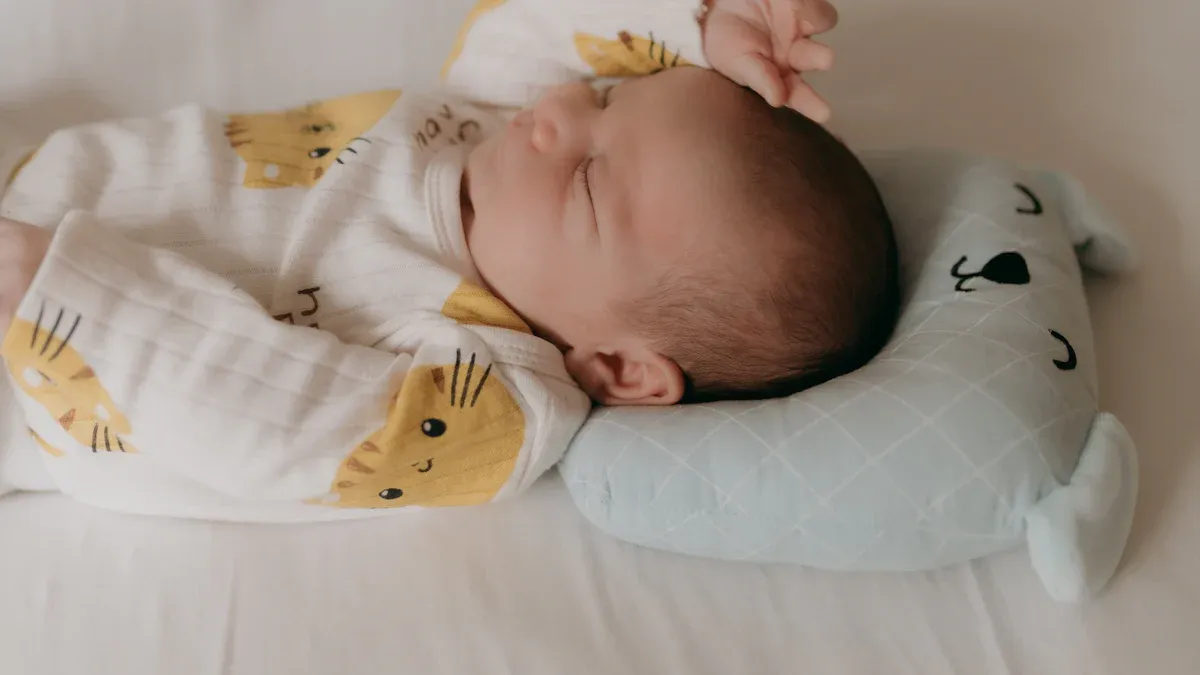
You may see many products that promise to help your baby’s head shape. A baby flat head pillow often looks soft and helpful, but it can be dangerous. Medical experts, including the FDA, warn that a flat head pillow can create an unsafe sleep space for your baby. These pillows are not needed to treat a flat spot on your baby’s head.
The main risks of using a baby flat head pillow include:
-
Increased risk of suffocation
-
Higher chance of sudden unexpected infant death (SUID)
-
Greater risk of sudden infant death syndrome (SIDS)
A flat head pillow can block your baby’s airway if they roll or move. Most babies under six months do not have the strength to move their head away from danger. Clinical studies show that soft objects like a flat head pillow or u-shaped pillow in the crib can lead to suffocation. Between 2012 and 2018, unsafe baby pillows were linked to 28 infant deaths. Many of these cases involved a flat head pillow that blocked the baby’s airway. The American Academy of Pediatrics says you should never use a flat head pillow or any soft bedding in your baby’s sleep area.
Note: You should only use a baby flat head pillow for supervised activities, never for sleep.
Alternatives for Flat Head Prevention
You can help your baby’s head shape without using a baby flat head pillow. Pediatricians recommend simple steps to prevent flat spots on your baby’s head.
-
Change your baby’s head position each time they sleep.
-
Begin tummy time in the first week while your baby is awake and you watch them.
-
Hold your baby often to take pressure off the back of their head.
-
Vary the crib position to encourage your baby to turn their head.
-
Limit time in car seats, bouncers, and swings.
-
Alternate arms when you feed your baby with a bottle.
Tummy time helps your baby build neck and shoulder strength. It also reduces pressure on the back of the head. You can make tummy time fun by using toys or singing. Carrying your baby and changing their head position during sleep also help prevent flat spots. These methods are safe and do not require a flat head pillow.
If you worry about your baby’s head shape, talk to your pediatrician. Most babies’ head shapes improve as they grow and move more. You do not need a baby flat head pillow to keep your baby healthy and safe.
Types of Baby Pillows
Nursing Pillows
You may use a nursing pillow to support your baby during feeding. This type of pillow helps you hold your baby close to your body. You can keep your baby’s head at the right height for breastfeeding or bottle-feeding. Nursing pillows can reduce strain on your arms and back. You should always stay awake and alert when using a nursing pillow. Never use a nursing pillow for sleep or leave your baby propped up without supervision.
Tip: Place your baby close enough to kiss during feeding. This keeps your baby’s head supported and lets you watch them at all times.
Sitting Support Pillows
Sitting support pillows help your baby practice sitting up. You can use these pillows when your baby starts to develop neck and head control. These pillows give gentle support around your baby’s body. You should only use a sitting support pillow when you are watching your baby. Babies do not need a pillow for sleep, especially in the first months. Pillows can block your baby’s airway if they roll or slump over. Wait until your child is at least two years old before using a baby pillow for newborn sleep. Always choose a firm, well-sized pillow that meets safety standards.
-
Sitting support pillows help your baby build strength in their neck and head.
-
You should never use a sitting support pillow for unsupervised sleep.
-
Make sure the pillow is firm and has no loose parts.
Head Shaping Pillows
Some parents look for a baby pillow for newborn head shaping. Health experts do not recommend these pillows for sleep. The FDA and doctors warn that head shaping pillows can increase the risk of suffocation and sudden infant death. These pillows are not approved to treat or prevent flat head syndrome. You should avoid using a head shaping pillow in your baby’s crib or sleep area.
| Evidence Type | Description |
|---|---|
| FDA Warning | The FDA has not shown that infant head shaping pillows are safe or effective. They link these pillows to suffocation and SIDS. |
| Health Professional Recommendation | Doctors do not support using these pillows because of safety concerns. |
| Lack of FDA Approval | These pillows are not approved for treating flat head syndrome or other medical issues. |
You can help your baby’s head shape by giving them tummy time and changing their head position during play. Always talk to your pediatrician if you have questions about your baby’s head.
What to Avoid for Baby Pillow Safety
Unsafe Materials and Designs
You want your baby to be safe when using a pillow. Some pillow materials and designs can be risky. Do not use baby pillows with soft, plush fabric or loose filling. These can cover your baby's face if the pillow moves. Unsafe designs include self-feeding pillows or ones that go around your baby's neck. These can trap your baby's head and make breathing hard.
-
Self-feeding pillows often have plush fabric that can block your baby's nose and mouth.
-
Some pillows hold a bottle in place, which can cause choking if your baby cannot turn away.
-
Pillows that wrap around the neck can trap your baby's head and stop airflow.
"The subcommittee made safety rules for nursing pillows using a CPSC study from Boise State University. The study said firmness is most important for safety, and airflow is also important."
Always check that any baby pillow you use is firm. Make sure it does not have straps or parts that could trap your baby's head.
Overly Soft or Plush Pillows
Soft or plush pillows may seem cozy, but they are not safe for babies. Babies have died after turning their heads into soft pillows and not being able to breathe. The CPSC says not to use pillow-like products for infant sleep because they can block your baby's airway.
-
More than 160 deaths have been linked to nursing pillows that were too soft.
-
Babies can suffocate if their head sinks into a plush pillow.
-
Always pick a firm pillow for your baby's head support during supervised time.
Never use a soft pillow for sleep or leave your baby alone with one.
Loose Parts and Decorations
Loose parts and decorations on a baby pillow can be unsafe. Small pieces can come off and block your baby's airway. Flexible covers and loose filling can flatten and shape around your baby's head, making it hard to breathe.
The U.S. Consumer Product Safety Commission (CPSC) warns that OmvedTherapies infant pillows are a suffocation risk. Their flexible cover and loose filling can flatten and fit around a baby's body or face.
Do not use any baby pillow with buttons, beads, or other decorations. Always check the pillow for strong seams and a firm shape. Never use a pillow with loose stuffing or parts near your baby's head.
Note: Never use a baby pillow for sleep when you are not watching your baby. Always keep an eye on your baby when using a pillow for feeding or support. Watching your baby is the best way to keep them safe.
Steps to Make a Safe Choice
Consult Your Pediatrician
You want your baby to have comfort and safety every day. Before you buy a baby pillow, talk to your pediatrician. Doctors see many cases where unsafe pillows cause harm. They warn that some pillows, especially those for head shaping, can lead to suffocation. The FDA and health groups say these products are not safe for your baby. Your pediatrician can help you choose a pillow that supports proper head alignment and proper spinal alignment. You can also ask about the best ways for preventing flat head syndrome and flat head prevention.
Here is a table with steps doctors suggest before you buy a pillow:
| Step | Recommendation |
|---|---|
| 1 | Use the rule 'close enough to kiss' for positioning your baby on the nursing pillow. |
| 2 | Avoid using the nursing pillow for sleep or propping your baby up unsupervised. |
| 3 | Do not take a nap while holding your baby in your lap on the nursing pillow. |
| 4 | Ensure the nursing pillow is manufactured after April 23, 2025, to meet safety standards. |
Tip: Always ask your doctor if you have questions about your baby's comfort or head shape.
Check Labels and Recalls
You should always check the label before you buy a baby pillow. Look for safety certifications like OEKO-TEX or CertiPUR-US. These show the pillow is safe for your baby’s comfort and health. Make sure the pillow is made for babies and meets the latest safety rules.
Many baby pillows have been recalled in the past five years. The Boppy Co. recalled over 3 million pillows because of suffocation risks. This recall happened after eight babies died. These cases show why you must check for recalls before you buy. You can visit the Consumer Product Safety Commission website to see if your pillow is safe.
-
Check for safety labels and certifications.
-
Look for recall notices on the pillow brand.
-
Choose a pillow made after new safety rules.
Follow Safe Sleep Guidelines
You want your baby to have comfortable sleep and comfort every night. Always follow safe sleep rules. Place your baby on their back on a firm, flat mattress. Keep the crib empty. Do not use a baby pillow for sleep. Only use a pillow for feeding or supervised sitting. This helps with comfort and can help with the best baby flat head pillows for support during awake time.
Remember, you can help with preventing flat head syndrome by giving your baby tummy time and changing their head position. These steps support comfort and can lower the risk of flat head syndrome.
Note: Your baby’s comfort and safety matter most. Always stay close and watch your baby when using any pillow.
You want your baby to sleep safely and comfortably. Remember these key tips:
-
Choose thin, breathable pillows designed for infants, not adults.
-
Use minimal bedding to keep your baby’s sleep area clean and safe.
-
Talk to your pediatrician about any concerns with your baby’s head shape or sleep needs.
-
Avoid head shaping pillows, as experts link them to risks like suffocation.
-
Always focus on products that match your baby’s stage of development.
Every baby grows at their own pace. When you put safety first, you give your baby the best start.
FAQ
When can you introduce a pillow to your baby?
You should wait until your baby is at least two years old before using a pillow. Babies younger than this have a higher risk of suffocation. Always ask your pediatrician if you feel unsure.
Are baby head shaping pillows safe for sleep?
You should not use head shaping pillows for your baby during sleep. Experts warn that these pillows can increase the risk of suffocation and sudden infant death. Use only for supervised activities.
How do you clean a baby pillow safely?
Remove the cover and wash it in cold water with mild soap. Wipe the pillow core with a damp cloth. Let everything air dry. Clean your baby’s pillow often to keep it fresh and safe.
What materials are best for a baby pillow?
Choose a pillow made from organic cotton, bamboo, or latex foam. These materials are gentle on your baby’s skin and reduce allergy risks. Always check for safety certifications before buying.
Can a baby use a pillow for tummy time?
You can use a firm pillow to support your baby during tummy time, but only when you watch closely. Never leave your baby alone with a pillow. Supervision keeps your baby safe during play.
https://www.liangliangbaby.com/how-to-choose-safe-infant-head-pillow-for-your-baby.html